
This article is written and medically reviewed by Dr. Ankit Kayal. A practising urology doctor in Jaipur with over 25,000 successful urological surgeries. He also treats urinary tract conditions such as urinary tract infections, bladder stones and urethral strictures, several of the conditions evaluated through cystoscopy.
Many urinary conditions show overlapping symptoms that make diagnosis by medical history and laboratory tests alone difficult. Blood in urine, recurring infection and incomplete bladder emptying are distinctive symptoms, and each can point to several causes. In such cases, doctors need direct visual evidence to confirm the main cause behind infection or inflammation.
This is why cystoscopy is done, in which a urologist examines the urethra and bladder using a thin camera-fitted instrument to confirm and rule out specific causes. Let’s learn more about this in detail:
What Is a Cystoscopy?
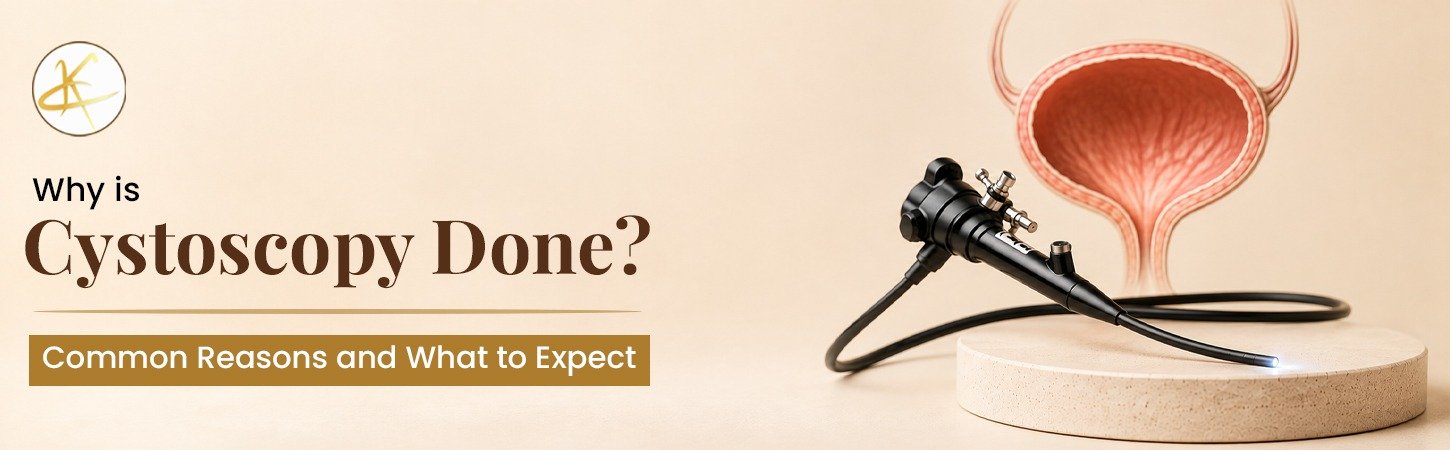
A cystoscopy test is a diagnostic procedure that allows a urologist to visually confirm the condition of the urethra and bladder using a narrow instrument called a cystoscope. The cystoscope is made with a lens or fibre optic system connected to a light source and a monitor. This instrument is inserted through the urethral opening and guided gently upward into the bladder. It allows a direct visual of both structures.
Why Is Cystoscopy Done?
Cystoscopy is recommended when urinary symptoms are difficult to explain through blood tests, urine analysis or imaging alone. Some of the common reasons for cystoscopy are:
- Possible bladder growth or tumour: A suspicious finding gets confirmed by direct examination, with a biopsy taken in the same sitting if the tissue looks abnormal.
- Recurring urinary tract infections: A stone or narrowed passage behind repeat infections shows up clearly once the urologist looks directly.
- Bladder stones: Size and position guide how a stone gets removed, and examining it directly gives both.
- Blood in urine: Infection, a stone, and a bladder growth can each cause this condition called blood in urine, and cystoscopy narrows down which one it is.
- Suspected urethral narrowing: Treatment planning for a stricture starts with knowing exactly where it sits and how tight it has become.
- Enlarged prostate affecting urine flow: How much the prostate is blocking the bladder outlet becomes clear once viewed directly.
- Weak or interrupted urine stream: The physical cause, usually somewhere along the urethra, gets located this way.
- Pain or difficulty urinating: Inflammation, narrowing, or another cause further down the urinary tract can all be checked in one examination.
- Follow-up after urological procedures: Some patients get it done as a follow-up treatment to confirm that the earlier treatment has been appropriate as expected.
What Happens During the Cystoscopy Procedure?
Cystoscopy is followed by a structured sequence that moves from preparation through direct examination to a short recovery period. The exact steps differ for both flexible and rigid cystoscope methods. Each stage of the cystoscopy procedure is outlined below.
Preparing for the Procedure
Prior to the procedure, patients are usually asked to empty the bladder and change into a hospital gown. Cystoscopy comes in two forms: flexible and rigid. For a flexible cystoscopy, a local anaesthetic gel is applied to the urethra and the examination is typically carried out in a clinical setting. To perform rigid cystoscopy, urologists prefer general or spinal anaesthesia. Once the anaesthetic takes effect, the urologist proceeds with the examination.
Passing the Cystoscope
When the anaesthetic is in effect, the cystoscope is inserted through the urethral opening and guided carefully towards the bladder. As it advances, sterile saline is passed through the instrument to expand the bladder, which gives the urologist a clear view of its lining.
A clear view of the internal lining allows doctors to visually confirm if there is inflammation, narrowing, stones or any other tissues that appear abnormal. If such tissue is found during the examination, a biopsy or minor treatment might be carried out in the same session.
Duration and What Follows
A flexible cystoscopy typically takes about 5 to 20 minutes. A rigid cystoscopy combined with treatment can take longer, and it also depends on what is found during the diagnosis. Once complete, the instruments are withdrawn, and the patient is kept under observation for a short period. Before discharge, patients are given instructions on managing mild symptoms, such as burning or urinary urgency, at home.
Is Cystoscopy Painful?
Cystoscopy is not usually painful. Comfort, though, is a different matter. Most patients feel pressure or a brief sting as the cystoscope passes through the urethra, a sensation that tends to be more noticeable during a rigid procedure done without general anaesthesia. A mild burning feeling while urinating afterwards is fairly common and usually lasts no more than a day.
Local anaesthetic or sedation eases much of this discomfort as it takes effect. However, you may not expect severe pain after the procedure. If you experience severe pain post-diagnosis, consult with your urologist right away. It may signal irritation or infection instead of a typical response to the examination.
What to Expect After Cystoscopy
Recovery after cystoscopy is generally short. Most symptoms ease within a day or two as the bladder and urethra settle, and none of it usually signals a problem. In the hours after the procedure, patients can expect one or more of the following:
- Mild burning during urination
- A frequent urge to urinate, even when the bladder is not full
- A small amount of blood in the urine, which usually clears on its own
- Extra water intake, where medically appropriate, to help ease irritation
Fever, heavy bleeding, severe pain, or an inability to urinate are not part of this expected recovery and any of these should prompt immediate contact with the urologist.
Conclusion
Persistent urinary symptoms without a clear cause should not go unaddressed, since delayed evaluation often means delayed treatment. Cystoscopy provides that clarity: a direct examination of the urethra and bladder, which is why cystoscopy is done when standard tests fail to identify the underlying cause. This direct view allows a urologist to confirm the exact diagnosis and recommend appropriate treatment.
If these symptoms apply to you, visiting a specialist will be the first thing to do. Schedule a consultation with Dr. Ankit Kayal, a highly renowned urologist in Jaipur, before the condition progresses further.