
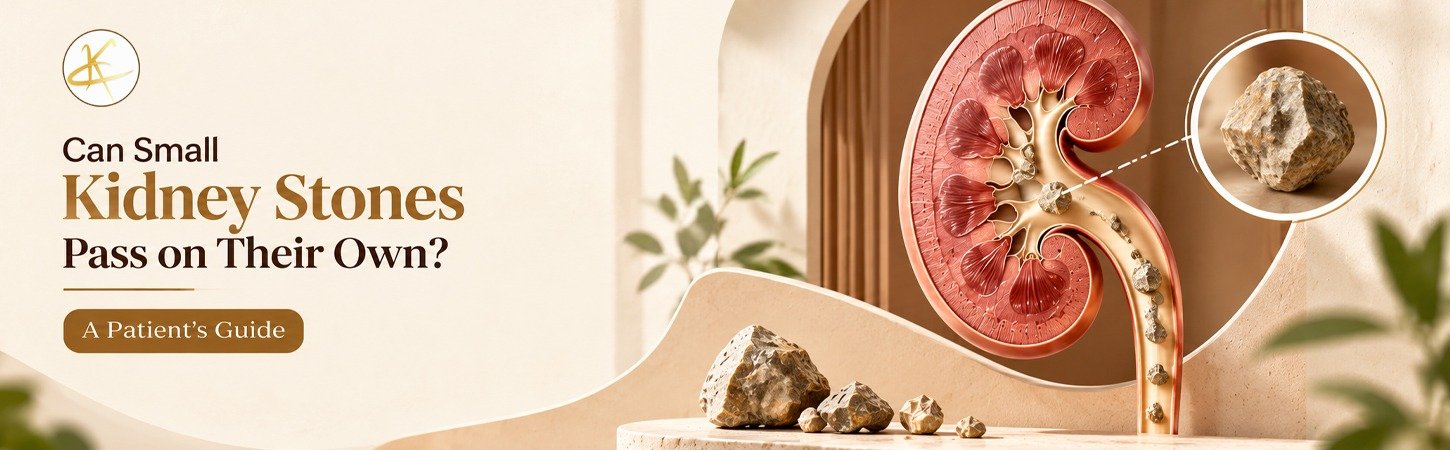
Kidney stones can be small and cause discomfort as they move through the urinary tract. To answer the question, “Can small kidney stones pass on their own?” Often, they can, particularly when the stone is small and there is no blockage or other complication. Its size, location and the person’s individual situation can collectively affect what happens next. The size of the stone is important to take into account when considering how likely it is to pass naturally.
What Size Kidney Stone Can Pass Naturally?
Stone size can make a difference, but it does not tell you everything. Smaller stones generally have a better chance of passing through the urinary tract than larger ones. Even then, there is no fixed size at which passage is guaranteed.
| Stone size | What it may mean |
| Under 5 mm | May pass naturally in many cases, depending on its location and the patient’s condition. |
| 5–10 mm | Passage is less predictable and may require closer medical follow-up. |
| Over 10 mm | Natural passage is less likely, and treatment may be considered depending on the circumstances. |
A stone’s location is also relevant. A stone that remains in the kidney has different implications from one that has moved into the ureter and is travelling towards the bladder.
Stone composition can also affect management. Different types of kidney stones may call for different approaches to prevention and, in some cases, treatment.
How Long Does It Take to Pass a Small Kidney Stone?
There is no fixed amount of time for a small kidney stone to pass. It may happen within a few days, but some stones take several weeks to move through the urinary tract.
- Size matters, but it is not the only factor. Where the stone is located can affect how easily it moves.
- The urinary tract itself differs from one person to another, so the time taken can vary between patients.
- If the stone has not passed after the expected period, a follow-up check is absolutely necessary. Continuing to wait without reassessment may not be appropriate.
- Pain may reduce even when the stone is still present. A follow-up scan or other assessment can help confirm whether it has actually passed.
What Can Help While a Small Kidney Stone Passes?
For some small stones, fluids, symptom relief and medical guidance can help while the stone moves through the urinary tract. The approach depends on the stone and the patient, so not every stone needs the same treatment.
Hydration and Pain Management
Drinking enough fluid can help maintain urine flow while a stone is passing. Pain relief should be taken only as recommended by a doctor, particularly if the pain is persistent or severe.
There are also many drinks promoted as ways to “flush” the kidneys. Kidney detox drinks should not be treated as a proven way to dissolve or remove a stone. Staying adequately hydrated is different from claiming that a particular drink can clear a kidney stone.
Medicines for Selected Ureteral Stones
Medication may sometimes be prescribed when a stone has moved into the ureter. Certain medicines can help relax the ureter, which may make passage easier in selected patients. Information about tamsulosin tablet uses should therefore be understood in the context of a doctor’s recommendation. It is not a medicine that every person with a small kidney stone needs.
Can Cystone Tablets or Syrup Help Small Kidney Stones?
Cystone products are used for urinary and kidney-related concerns, but they should not be treated as a guaranteed way to remove a kidney stone. Their use should be considered alongside the stone’s size, location and the advice of a healthcare professional.
- Information about cystone tablet uses can help patients understand where the tablet formulation may fit, but it should not replace medical assessment.
- Evidence and product limitations should be considered before relying on either formulation as part of stone management.
- The same applies to cystone syrup uses. A syrup formulation is not automatically suitable for every patient or every type of kidney stone.
When Does a Small Kidney Stone Need Medical Treatment?
A small kidney stone does not always need a procedure. However, certain symptoms can signal a problem, particularly if there is an infection, blockage, or the stone is not passing.
- Fever or chills should not be ignored when a kidney stone is present, as they can occur with an infection.
- Pain that remains severe or cannot be controlled may need medical assessment rather than continued observation.
- Ongoing vomiting can make it difficult to retain fluids and may require treatment.
- Difficulty or inability to urinate needs prompt medical attention.
- Even a small stone can block urine flow. If that happens, treatment may be needed despite the stone’s size.
- When a stone has not passed within the expected time, another assessment can show where it is and whether it is still causing a problem.
- The scan results, symptoms and stone location all help guide the next step. Depending on these findings, kidney stone treatment may involve continued observation or a procedure.
Get Guidance on Your Next Steps
The next step depends largely on where the stone is and how large it is. A scan can show both and give the urologist a clearer picture of what is going on. If you have a scan report or questions about treatment, Dr. Ankit Kayal, the top urologist in Jaipur, can discuss the findings and possible options with you.
Frequently Asked Questions
Can a 3mm Kidney Stone Pass on Its Own?
A 3mm kidney stone can pass naturally in some cases. Its location still matters, as do any blockage, infection or other complications.
Can a 5mm Kidney Stone Pass Without Surgery?
A 5mm stone can sometimes pass without surgery, but passage is not guaranteed. The stone’s location and the patient’s symptoms help determine whether observation is appropriate.
How Do You Know If a Kidney Stone Has Passed?
You may be able to collect the stone when it passes, but feeling less pain does not confirm that it is gone. Follow-up imaging may be needed to confirm passage.