
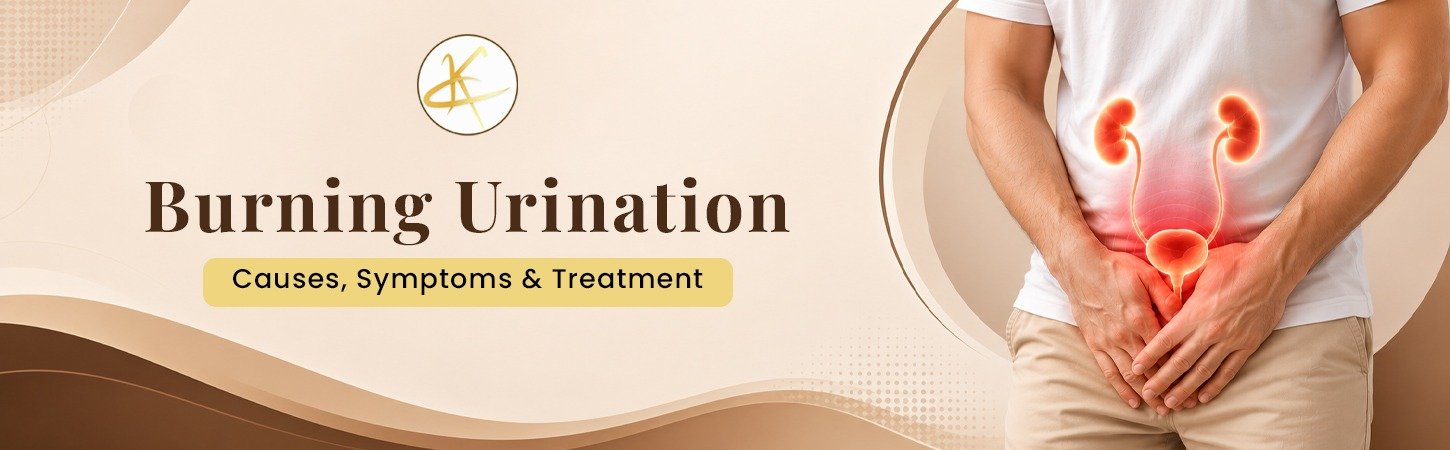
A burning feeling during urination is uncomfortable, and it’s your body flagging that something in the urinary tract isn’t right. The cause could be a kidney stone, a UTI, an enlarged prostate in men or something simpler like irritation. Either way, guessing doesn’t help. If you are experiencing this symptom, consulting a qualified urology doctor in Jaipur can provide the specialised evaluation necessary to determine the reason behind it and initiate proper care.
This guide explains what burning urination is, common causes, symptoms that you may experience with burning urination, as well as the diagnosis and treatment process.
What Is Burning Urination?
Burning urination, medically known as dysuria, is an uncomfortable burning or stinging sensation while passing urine. It is a common medical condition that can happen to anyone irrespective of age and may be experienced at the start, during and after passing urine. The sensation results from the irritation or inflammation of the urinary tract lining. A burning sensation during urination is a symptom that indicates there is something wrong in your urinary tract, not a disease.
Quick Summary Box
The feeling of pain during urination may be due to various reasons, which can include minor irritation as well as conditions that need medical intervention. Paying attention to other symptoms, like fever, the presence of blood in the urine or excessive urination, may help in pinpointing the cause.
Common Causes of Burning Urination
A burning sensation while urinating may be a sign of an underlying problem in the urinary tract. Here are the illnesses that are likely to cause such a symptom.
Urinary Tract Infection (UTI)
UTI is the most common cause of a burning sensation during urination. The bacteria get into the urinary tract, inflame the bladder and urethra and thus cause burning, frequent urges and pain. The accompanying symptoms include cloudy urine, frequent urination and a strong smell. Infections and stones often overlap, and if you’ve dealt with both, a clear understanding of the relation between kidney stones and UTI explains how one can lead to the other.
Kidney Stones
A moving stone in the urinary tract can cause the lining to be irritated as well as the obstruction of the natural urine flow, resulting in burning pain. Some smaller stones may come out by themselves, while some larger stones require medical intervention. If you’re noticing warning signs like back pain, blood in the urine, or nausea, these 10 symptoms and causes of kidney stones are worth checking.
The severity of burning will vary depending on the type of stone. A closer look at Kidney Stones: Types and Formation shows why struvite and calcium stones behave differently and how each one develops.
Enlarged Prostate (BPH)
In men, an enlarged prostate may press the urethra and interrupt the process of urination. Such symptoms as burning, dribbling, and incomplete elimination of urine occur slowly. Reviewing BPH Diagnosis and Treatment is a useful way to understand the options for lasting relief.
Other Possible Causes
Burning urination can also develop because of several other conditions or lifestyle factors, including:
- Dehydration: Dehydration of the body leads to concentrated urine, which irritates the walls of the urinary tract and causes burning sensations while urinating.
- Sexually transmitted diseases (STDs): STDs like chlamydia and gonorrhoea result in burning sensations while urinating, with additional symptoms like discharge, discomfort in the genitals and pelvis.
- Bladder irritation: Scented hygiene products, bath foam, caffeine, alcohol and spicy food are known to irritate the bladder and cause a burning sensation while urinating.
- Medications: Certain medications can be among the causes of burning sensations while urinating.
Symptoms That May Accompany Burning Urination
Urination with a burning sensation never happens alone. Rather, it comes with other symptoms that show the intensity and causes of the problem. The following are among the symptoms you need to be aware of:
- Excessive urination
- Bloody urine
- Pain in lower abdomen
- Pain in back or sides
- Fevers or chills
- Trouble urinating
How Is Burning Urination Diagnosed?
Burning during urination can be diagnosed by detecting the actual cause of the condition through a physical examination and other diagnostic tests. These are a few methods by which doctors normally diagnose where the problem originates, such as :
- Medical history: In order to understand your current health status, your doctor may ask about the symptoms you experience, your lifestyle habits, and past infections related to urine.
- Urine Test: Through this test, your urine sample is analysed for the presence of any infection, blood, or anything else unusual.
- Urine Culture: By this test, doctors get to know about the specific bacteria causing the problem, and it also directs them in a proper way regarding treatment.
- Blood Tests: A blood test helps in knowing about the condition of the kidneys, and it may also be helpful in diagnosing any systemic condition in the body.
Because these conditions may require different specialists, understanding the difference between urology and nephrology can help you identify the most appropriate expert for your care.
Burning Urination Treatment
The treatment for painful urination varies according to the underlying condition that causes this symptom. Hence, a proper diagnosis is crucial before any treatment process can be administered.
- Antibiotics for bacterial infections: Bacterial infections of the urinary system are normally treated with antibiotics. Proper completion of antibiotic therapy is needed to rule out the infection and decrease symptoms.
- Kidney stone treatment: Small stones usually pass on their own with fluids and medication from a doctor. If a stone is too big or too painful to pass, doctors turn to a procedure like laser treatment. To know more about kidney stone treatment, read our blog on Kidney Stone Laser Treatment: Everything You Need to Know.
- Medications for an enlarged prostate (BPH): For men with BPH, medication can relax the prostate muscles and shrink the prostate over time.
- Staying hydrated: Water dilutes the urine, which makes it easier for the system to flush itself out.
- Avoiding self-medication: Using medications without consulting with a doctor can lead to incorrect diagnosis and choice of treatment. Consulting a healthcare provider helps ensure the underlying condition is managed appropriately.
When Should You See a Urologist?
Even if minor cases of burning when you urinate can clear up on their own, there are a few signals that really suggest you should get a medical consult. These include the following situations:
- Burning that doesn’t ease up and continues past 48 hours even though you’re drinking enough water
- Blood in your urine, meaning it looks pink, red or brown in color
- A fever, which can suggest the infection is spreading
- Strong pain in the belly, back, or on the side, more than just mild irritation
- Problems that keep coming back, even after you were already treated before
- Difficulty urinating, like a weak stream and/or a flow that seems blocked
Getting proper medical attention can help figure out the cause and prevent serious outcomes such as kidney injury or the development of a broader infection.
Conclusion
Urgency in urination is one of the common signs that indicate a problem inside the urinary tract. It can be caused by urinary infections, kidney stones, an enlarged prostate gland, and other issues related to dehydration and bladder irritation. Identifying the related symptoms and knowing the correct treatment is vital in order to cure oneself of this disease. Although burning during urination is not a major problem in itself, its presence cannot be ignored. If you are feeling similar symptoms, then consult with Dr. Ankit Kayal today, who has more than 20 years of experience in treating urinary tract conditions.
FAQs
1. What is the most common cause of burning urination?
Burning urination occurs due to the irritation of the bladder and urethra caused by an infection of the body with bacteria.
2. Can kidney stones cause burning while urinating?
Yes. As a stone moves through the urinary tract, it scrapes against the lining, and that’s what causes the burning.
3. Is burning urination always caused by a UTI?
No. UTIs are the usual suspect, but they’re not the only one. Kidney stones, prostate issues, dehydration, and STIs can all bring on the same symptom.
4. Can dehydration cause burning urination?
Yes, drinking less water means more concentrated urine. Concentrated urine contains higher levels of waste products and acids that cause a burning sensation while urinating.
5. Which doctor should I consult for burning urination?
The right doctor to diagnose burning urination is a urologist, as they diagnose and treat conditions affecting the urinary tract in both men and women.