
Kidney stones is a health issue that is prevalent in many individuals throughout the globe. They come to some people once in life and to some they come again and again. These are very painful stones that may disrupt the normal life.
In this article, you will get to know types of kidney stones and how do they form by Dr. Ankit Kayal who provides Kidney Stone treatment in Jaipur.
What Are Kidney Stones?
Kidney stones are mineral deposits that are hard and are formed within the kidneys. They resemble the tiny rocks or crystals. There are also some stones that are small like sand and there are ones that may be large like a coin.
Kidney stones develop in kidneys, although they may also spread to other systems of the urinary tract, including:
- The ureters (urine carrying tubes)
- The bladder
- The urethra

Why Are Kidney Stones Painful?
The occurrence of pain occurs when a stone travels and obstructs the urine flow. This brings about pressure and swelling within the kidney. It may be sudden and extremely intense and may be experienced in the lower area of the back, or the side of the body.
How Do Kidney Stones Form?
The understanding of kidney stone formation process plays a major role in prevention of kidney stones.
Stepwise Process in Formation of Kidney Stones
Kidney stones are normally formed due to concentrated urine. This implies the lack of sufficient water in the urine.
The process occurs in the following way:
- In case of lack of enough water, the urine becomes thick.
- The accumulation of minerals such as calcium, oxalate and uric acid occurs.
- These minerals begin developing minute crystals.
- Crystals are attached to each other with time.
- They develop into bigger crystals which become stones.
When the urine is retained over a long period of time, the stones have more time to develop.
Since kidney stones commonly form due to concentrated urine and inadequate fluid intake, supporting the kidneys through proper hydration and kidney detox can help reduce mineral buildup and promote healthier urine flow.
Types of Kidney Stones
Kidney stones are of four major types. Different types originate because of different reasons.
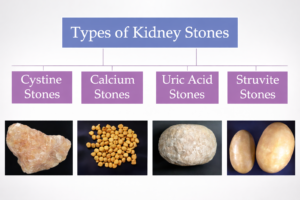
1.Calcium Stones
The most prevalent type of kidney stones is the calcium stones.
They are normally developed when calcium combines with other materials in the urine.
Types of Calcium Stones
- Calcium oxalate stones
- Calcium phosphate stones
Why Do Calcium Stones Form?
Common reasons include:
- Not drinking enough water
- Eating too much salty food
- Consumption of high amounts of oxalate foods (spinach and nuts).
- Certain medical conditions
Calcium is not a causative agent of calcium kidney stones. Actually, food containing balanced calcium is able to prevent stones.
2.Uric Acid Stones
Kidney stones that are caused by uric acid are developed when urine is too acidic.
Causes of Uric Acid Stones
- Eating too much red meat
- High protein diets
- Gout
- Diabetes
- Low water intake
These stones are frequent in individuals that lose fluids easily e.g. by sweating or diarrhea.
3.Struvite Stones
Infection is associated with struvite kidney stones.
They tend to develop as a result of urinary tract infections (UTIs).
Features of Struvite Stones
- Grow very fast
- Can become very large
- More common in women
- Very often develop without the first signs
These can be referred to as kidney stones through infection and they can require medical intervention at a fast rate.
4.Cystine Stones
Cystine renal stones are scarce.
They occur due to a hereditary defect of parents.
Why Cystine Stones Form
- Cystine is leaked in urine as a result of a body problem.
- However, cystine crystals create stones.
- There are always the stones returning.
They are referred to as genetic kidney stones and in most cases, they require long-term care.
Symptoms Based on Stone Type
There are many kidney stones that have similar types of symptoms.
Ordinary Symptoms in the Kidney Stones
- Extreme pain on one side of or lower back.
- Translocation of the pain to the stomach or the groin.
- Blood in urine
- Itchy sensation during urination.
- Frequent urge to urinate
- Nausea or vomiting
- Fever (presence of infection)
Is the Change According to the Type of Stone?
- Stones in the urine: Pain of sharp nature, bloody urine.
- Uric acid stones: The presence of pain in acidic urine.
- Struvite stones: Signs of fever, infection.
- Cystine stones: Pain with time.
Diagnosis of Kidney Stones – How Are Kidney Stones Diagnosed?
There are various modes of kidney stone diagnosis by the doctors.
Common Tests Used
- Minerals and infection check urine tests.
- Blood tests: Test high calcium or uric acid.
- Imaging tests:
- CT scan
- Ultrasound
- X-ray
- Stone analysis: In case a stone passes by it is tested to determine the type of stone.
The tests assist doctors in determining the optimal treatment.
Related Blog: Healthy Diet for Healthy Kidneys
Frequently Asked Questions:
1. Which type of kidney stone is painful?
Any kidney stone may be a painful one. The extent and motion of the stone is chiefly what determines pain, rather than its nature. Stones stuck in the ureter are the most painful when they are large.
2. Which kidney stones cannot be dissolved?
- Dissolution of calcium stones is not normally possible.
- Surgery is frequently required with struvite stones.
- Stones of cystine are difficult to dissolve.
In other cases, the uric acid stones are soluble using medicine.
3. What size of kidney stone requires surgery?
- Much of the stones less than 5 mm in size are self-expelled.
- The stones that are bigger than 7 mm might require treatment.
- Large stones can easily be operated.
4. What dissolves kidney stones quickly?
- Drinking lots of water
- Drugs which lower urine acid.
- Doctor-prescribed treatments
There is no instant cure. The treatment is dependent on the type of stone.
5. What’s the worst type of kidney stone to have?
Struvite stones are sometimes regarded to be the worst since:
- They grow very fast
- They are linked to infection
- Kidneys can be damaged when not treated