

What you feed on is directly connected with the state of your kidneys and many individuals are not aware of the extent to which foods which predispose them to kidney stones relate to their susceptibility. The shocking thing is that even the foods that are often described as being healthy, such as spinach, nuts, and even a specific type of tea, sometimes silently cause the development of kidney stones in people who are predisposed to this condition. Be it the calcium oxalate stones or just an attempt at a preventive measure, it is always best to understand what is on your table before it.
How Do Kidney Stones Form?
Kidney stones are formed when the concentration of minerals and salts in the urine is too much to the extent that they are not dissolved and thus crystaluria occurs. These crystals attach with time to form hard deposits-stones- within the kidneys.
There is a long-standing relationship between dehydration and kidney stones: the lesser the fluid the higher the concentration of the urine and the faster the crystals develop. The most frequently used ones are:
- Calcium oxalate stones the most common, which are formed by the association of calcium with oxalate.
- Uric acid stones– occur when urine is too acidic usually caused by excessive intake of protein.
- Struvite stones – they are normally precipitated by urinary infections.
Of almost any other factor, diet affects the concentration of these compounds in urine.
High Oxalate Foods That Increase Risk
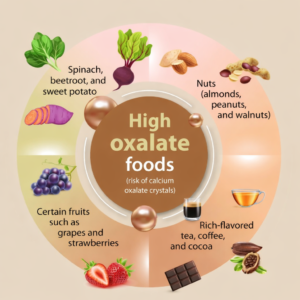
The list of high oxalate foods is even longer than anticipated by most people. Oxalate is a naturally occurring substance which when taken in excess combines with calcium in the kidney and forms stones.
Spinach and kidney stones have a close relationship- raw spinach is among the highest foods that contain oxalates. It can be cooked so that oxalate is minimized, but not to a level that is safe among high-risk groups. Beets, on the same note, are prolific in oxalates, and are to be avoided. Common offenders are nuts (almonds and cashews, in particular), and chocolate (cocoa powder, in particular). Tea- especially black tea intake in high dose also increases the level of oxalate by a considerable margin.
| Food | Oxalate Level | Risk Level |
| Spinach (raw) | Very High | High |
| Beets | High | High |
| Almonds/Cashews | High | Moderate–High |
| Dark Chocolate | High | Moderate–High |
| Black Tea | Moderate–High | Moderate |
When foods rich in oxalates are problematic to you, it may not always be necessary to stop eating them, but combining them with foods rich in calcium at the same meal can help them bind the oxalate in the gut and prevent the oxalate from reaching the kidneys.
Foods High in Sodium
Kidney and sodium are directly physiologically related. The way that your kidneys react is by passing on more calcium through the urine when you take too much salt. An increase in urinary calcium provides the extra oxalate and phosphate to be bound to – leading to the formation of stones.
Kidney stones and processed food is problematic, as sodium snuck its way into packaged snacks, pickles, canned soups, fast products, and ready meals. In foods that do not necessarily have a salty flavor, such as bread and breakfast cereals, sodium loads may be very high. The daily intake of sodium that is recommended to prevent kidney stones should not exceed 2,300mg, and in the ideal case, it should be lower than that especially when a person has a history of kidney stones.
Animal Protein & Kidney Stone Risk
Uric acid is mainly the connection between animal protein and kidney stones. Proteins of red meat and the sources of kidney stones when metabolized by the body, that is, beef, lamb, pork, lead to purines which decomposed to form uric acid. A high level of uric acid in the urine forms the acidic environment in which the uric acid stones survive.
In addition to uric acid, large amounts of animal protein also contribute to an increase in the calcium in the urine and a decrease in citrate – a substance which ordinarily prevents the formation of stones. The most dangerous ones are organ meats, shellfish, and processed meats. A dietary change required of stone-prone people, is the substitution of certain animal protein by plant-based ones such as lentils, tofu, or beans.
Sugar & Soft Drinks
Is sugar the cause of kidney stones? Studies are pointing towards yes. There is a direct relationship between fructose and kidney stones of the fact that fructose raises the concentration of urinary oxalate and uric acid, which is a stone-forming substance. It is especially problematic with high-fructose corn syrup that is present in sodas and packaged juices in abundant amounts.
Risk of the kidney stones and soda is well-documented.
- Soft drinks – carbonated drinks in particular, are a source of phosphoric acid that changes the chemistry of the urine and facilitates the formation of stones.
- Non-cola high-sugar sodas also are significant risk-increasing agents, elevating urinary calcium and oxalate. Water is without a doubt the best alternative.
Instead of sugary beverages, you can switch to healthier options like kidney detox drinks that support kidney function and help reduce stone risk.
Foods That Are SAFE for Kidney Stone Patients
Dieting to avoid kidney stones does not imply living a life of boredom and limitation. There are a number of foods that actively lower the risk of stones:
- Lemon water – citric acid increases urethra citrate that prevents the formation of crystals.
- Coconut water – hydrating naturally with potassium, which inhibits urinary calcium.
- Calcium-containing foods (in the right quantity) – counter to expectation, the calcium supply in the diet in the form of dairy or fortified foods attaches itself to oxalate in the intestine, which leaves less of it to be absorbed by the kidneys.
- Cucumbers, watermelon, oranges, low-oxalate vegetables such as cauliflower, cabbage, and peas are also included in the kidney stone diet chart method.
Following a proper diet to prevent kidney stones can significantly reduce recurrence and improve long-term kidney health.
Sample Kidney Stone Diet Plan
Morning: Lemon water and oatmeal with low-fat milk and banana Mid-morning: Coconut water/ plain water Lunch: Brown rice, lentil dal, and cabbage stir-fry, low-fat yogurt Evening: Buttermilk, a handful of pumpkin seeds Dinner: Chapati, paneer/ tofu sabzi, cucumber salad
When to See a Urologist
The symptoms of kidney stones are pain on the back or side of severe pain, pain during urination, pink or red urine, nausea, frequent urination. Delayed assessment should not be done when these manifest. In case you are having the symptoms then you should see a kidney stone specialist to get the symptoms diagnosed and treated promptly. Complications and recurrence are avoided through early intervention. Dr. Ankit Kayal – Top Urologist in Jaipur, provide treatment and dietary planning for kidney issues.
FAQ Section
What foods trigger kidney stones?
The major dietary triggers include high-oxalate food (spinach, beets, nuts), sodium overload, red meat, and fructose-rich sodas as well as inadequate intake of water.
Is tomato bad for kidney stones?
The tomatoes have moderate oxalate. Tomatoes in their entire form should be usually okay in their usual amounts, however tomato concentrate and tomato purees can be more dangerous to the sensitive people.
Does milk increase kidney stones?
No, dietary calcium in milk and dairy does indeed aid in lowering risk of stones by binding oxalate in the intestine. The trick lies in not over supplementing with calcium and not calcium in diet.
Can I eat rice if I have kidney stones?
Yes. White and brown rice contain low amounts of oxalate and are safe. Brown rice is better in terms of its general nutritional content.
Is lemon water good for kidney stones?
Absolutely. One of the most suggested natural precautions of stones is lemon water. Its citric acid increases urinary citrate that actively inhibits the formation of calcium oxalate crystals.